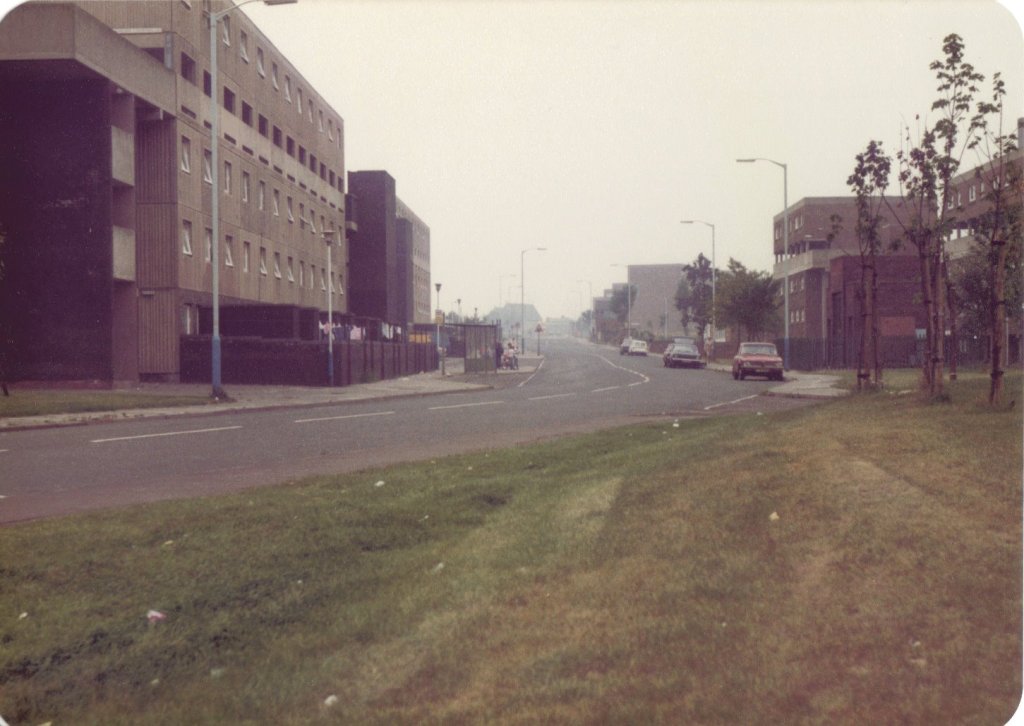
Last week I published my blog post with my memories of the School Street Flats in the early 1970s. I was quite astonished by the response I received in the Hebburn Facebook groups and on the Hebburn and our Neighbours web site. So many people came forward with information and their own, usually happy, reminiscences of life in the flats. They filled in a few gaps in my own memory.
Apparently, the flats were known to people in Hebburn Quay as Crudden’s Flats after the company that built them.
I had forgotten about the railway lines that ran between the flats and St. Aloysius’ Infant School and crossed Argyle Street. The railway crossing gates would come down across the road to stop the traffic so that the trains could transport steel to Palmer’s and Leslie’s shipyards. Now that it has been mentioned, I do remember walking with my nana and waiting for the gates to rise so that we could continue down Argyle Street.
Likewise, I had forgotten about the central heating chimney – all the flats had always-available central heating and hot water and there was a building where all the heat was generated. Am I correct in remembering the chimney as being cone-shaped?
One very clear theme that came through in the comments I received was the strong sense of community that existed among the residents, even though critics at the time said that developments like this one destroyed communities. Although I was only ever a visitor, living in the other end of Hebburn (near the Technical College), I remember this sense of community too. All the neighbours knew and looked out for each other. I recall a conversation with my mam a couple of years before she died; she commented about my childhood years “We didn’t have a lot, but we never wanted for anything.” She was right; they weren’t the easiest of times, but it seemed like everybody did their best to rub along together. As Ian Dury put it so well in his song Reasons to be Cheerful, part 3, we had:
A bit of grin and bear it,
A bit of come and share it,
You’re welcome, we can spare it.
It’s also worth remembering that, for all they were short-lived, the School Street Flats provided a significant step up in housing conditions for a lot of people, who might have moved from old, terraced houses with backyard toilets and no bath or hot water to a flat with central heating and all modern conveniences.
Thank you once again to everyone who shared their memories of the flats. They are an important part of recent Hebburn history and it would be a shame for them to be forgotten.
Addendum 19th August 2025: Once again, an amazing response to this follow-up post, and some additional information.
The chimney for the heating was straight, not cone-shaped (the cone-shaped ones are for the Tyne Tunnel) and the building that housed the heating had a large BP logo on the wall (which I kind of remember now). Local kids referred to the building as “The BP”.
The railway gates on Argyle Street didn’t move up and down. They swung like a regular gate and were opened and closed manually by the man who worked in the signal box. He used a latch to join the gates together when they closed. Here is a photograph from 1987 showing the railway crossing and gates:
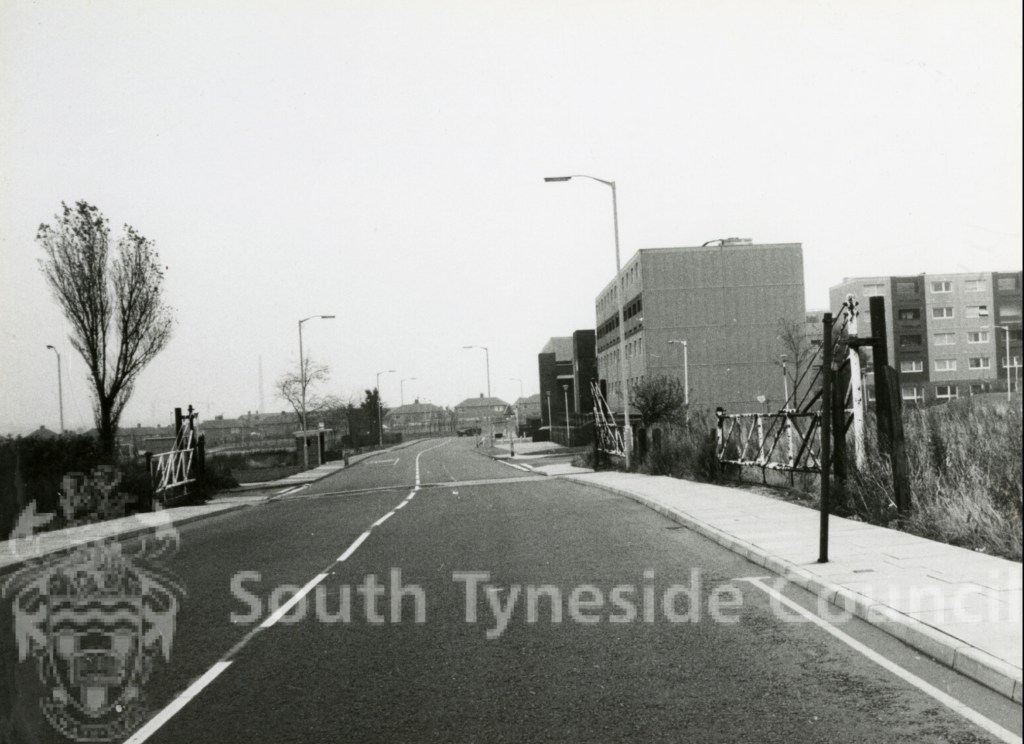
You can see in the photograph above that demolition of the flats is already underway. The flats on the left hand side of the road are gone and the ones on the right are in visibly bad repair. By 1990, all the flats would be gone.
There was a set of “up and down” gates where the railway crossed Albert Road.
There were stories that the train that ran on these lines was haunted.
Our school dinners were cooked in the Council kitchen in Council Yard off Glen St, back of the Station Hotel and then delivered to the schools.
 Andrew Gilhooley's Blog
Leave a comment