Here’s part two of a series of 20 albums I picked for a Facebook challenge a few years ago. The challenge was to choose 20 albums that had made an impact on me. For each album I mention, I’m including a YouTube link to a track from that album so you can get a taste of the music.
6/20 – Today’s choice of an album that had made an impact on me is 1975’s “Minstrel in the Gallery” by Jethro Tull.
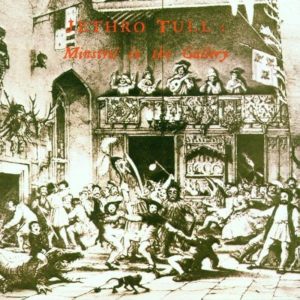
I have noticed over the years that my favourite album by a band is often the one that is described as “their least commercially successful but possibly their most artistically ambitious”. I think “Minstrel” is one of these albums. Side two is largely comprised of “Baker Street Muse”, a magnificent, 17-minute epic song, or suite of songs depending on how you look at it, set in the London of the early 1970s. On side one, we have one of the most beautiful, saddest songs I have ever heard, “Requiem”. Again, an album that really takes you on an emotional journey, probably inspired by Ian Anderson’s recent divorce at the time.
If you buy the 2002 CD re-release, you also get five bonus tracks, including the lovely “Summerday Sands”. When I bought this version to supplement my vinyl copy, I was playing bass in the orchestra for a production of “Cabaret”, and I thought that “Summerday Sands” could easily have been written about Sally Bowles.
Anyway, check it out, great album! Here’s “Requiem” as a sample.
7/20 – For my seventh album that made an impact, I am choosing the Penguin Café Orchestra’s second, self-titled album from 1981.
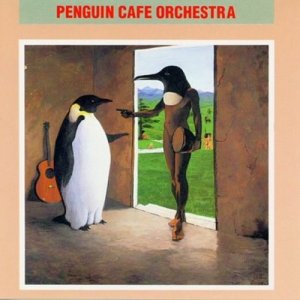
You may not have heard of the Penguin Café Orchestra but you have almost certainly heard its music, which has been featured in numerous films and TV commercials, most notably the Mercury One2One advertising campaign from the 1990s.
Hearing the Penguin Café Orchestra’s music for the first time was like hearing music from a parallel universe. It was so familiar, yet quite unlike anything I had heard before. Pieces like “Cutting Branches for a Temporary Shelter” have an aching, otherworldly beauty that defies description.
The group released only five studio albums, two live albums and an EP in the 24 years they were active. Composer and bandleader Simon Jeffes was taken from us far too early by an inoperable brain tumour in 1997 aged only 49. My composition “Little Creatures on the Moon” is a tribute to him.
Here’s “Air à Danser” from “Penguin Cafe Orchestra”.
8/20 – For day 8’s album, I’m going to go for something a little different. It would be easy to choose twenty albums that had an impact on me because I thought they were especially good. This one I am choosing because it is so decidedly strange and because it has such an interesting story, hence a longer than usual post today.
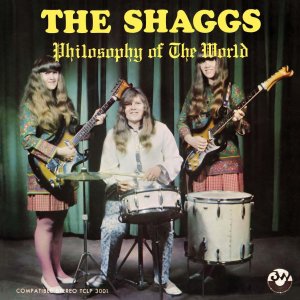
“Philosophy of the World” by the Shaggs (1969) is possibly one of the most bizarre pop albums you will ever hear. One journalist described it as being like music written by aliens from a planet where music didn’t exist, who had read about earthling music but had never heard any before they started to perform. An alternate description might be “like the von Trapp family on powerful hallucinogens”.
The members of the Shaggs are all sisters, Dot (vocals and guitar), Betty (vocals and guitar) and Helen (drums) Wiggin, from Fremont, New Hampshire, a town of a few hundred people at the time. Their father, Austin Wiggin, had been told by his mother, who was reputed to have psychic abilities, that his daughters would form a famous pop band. He promptly pulled them out of high school in 1968 and began home-schooling them and arranging for them to have music lessons.
It wasn’t long before they were performing for dances at the village hall (audience reactions were, shall we say, mixed) and booked into a studio to record this album. Only a thousand copies of “Philosophy of the World” were pressed, and most of these mysteriously disappeared. Reluctant pop stars at best, the Shaggs disbanded immediately upon Austin Wiggin’s death in 1975.
A few copies of the album survived, however, and the album was rediscovered and re-released in the 1990s and again in the 2000s. The band’s music was championed by artists including Frank Zappa and Kurt Cobain. Such was the renewed interest in this oddball band that they were invited to reform and play at a few festivals, and they have even inspired a stage musical.
I will probably write more at some point about the circumstances under which I discovered this album, but for now, ladies and gentlemen… the Shaggs!
Here is “My Pal Foot Foot” from “Philosophy of the World”.
9/20 – For my ninth Album that made an Impact I am going to choose another fairly obscure pop album, though one with a markedly different sound than yesterday’s choice.
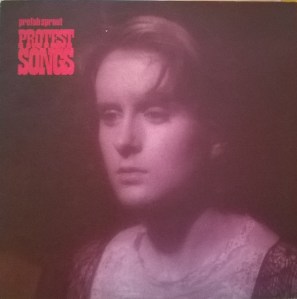
“Protest Songs” (1989) is probably the least known of Prefab Sprout’s albums, which is a shame as it has some cracking songs on it and, as a self-produced album, beautiful, stripped-back production.
This album was actually recorded in 1985, right after “Steve McQueen” (or “Two Wheels Good” as it is known here in the US), but it was held back from release by the record company as they did not want to interfere with the former’s sales, as it was doing rather well. It was finally released in 1989 as a stop-gap whilst the band were recording their ambitious double-album “Jordan: The Comeback”.
Paddy McAloon is, in my opinion, one of the UK’s best songwriters, and this is a solid set of pop tunes that are anything but predictable, from the 6/4 time signature of opener “The World Awake” to the lyrics of “Horse Chimes” to the stark beauty of “Dublin”. Another interesting listen is “Diana”, a rumination on public perception of the Princess of Wales, written when she was alive and Prince William just a baby.
Finally, this was one of the first albums I bought on CD, from the bargain bin of HMV on Northumberland Street, Newcastle (where Paddy McAloon met his wife, if you want an extra bit of trivia!).
Here’s “Horse Chimes” from “Protest Songs”.
10/20 – Halfway through the twenty albums, and today I am going to choose “Ommadawn” by Mike Oldfield, released in 1975.
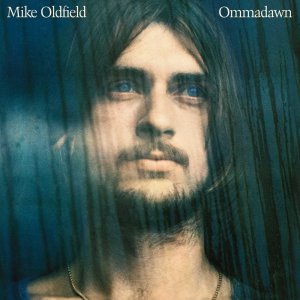
After the runaway success of “Tubular Bells” and the lukewarm critical response to the follow-up “Hergest Ridge”, this album shows Oldfield establishing himself as a serious musical contender.
What I have always admired about Mike Oldfield as a composer is his amazing sense of melody and his ability to take the listener on an emotional journey throughout an extended piece of music. The way he brings different musical themes in and out of the music in varying forms is quite exquisite. And when you consider that he is playing 90% of the instruments himself, back in the days before you could sequence anything, makes an album like this quite an amazing achievement!
If you are unfamiliar with Mike Oldfield’s music, this album, with its light and shade, its calm and its storms, is a good place to begin to get acquainted with it.
Each side of the”Ommadawn” is a complete piece of music in itself, so here’s an excerpt that was a limited-release single to give you a taste of it.
 Andrew Gilhooley's Blog
Leave a comment