Here’s part three of a series of 20 albums I picked for a Facebook challenge a few years ago. The challenge was to choose 20 albums that had made an impact on me. For each album I mention, I’m including a YouTube link to a track from that album so you can get a taste of the music.
11/20 – Today’s album is “Forever Changes” by Love, released in 1967.
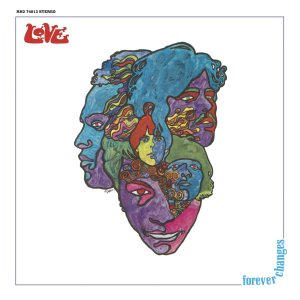
I always used to see copies of this album in used record shops when I was a teenager and was familiar with the song “Alone Again Or”, but it would be years later before I actually purchased a copy. It was definitely a musical case of “Where have you been all my life?” when I did, because this is quite simply one of the best albums I have ever heard, by anyone.
“Forever Changes” sounds like an album from the late 1960s, yet it also sounds absolutely timeless. Songs like “A House is Not a Motel”, “The Red Telephone” and “The Good Humor Man He Sees Everything Like This” sound as fresh and relevant as any recording of today. As a composer, Arthur Lee had a gift for making a song take unexpected twists and turns, so there are always surprises awaiting the listener. Some of the timelessness of the album’s sound may come from his scepticism with the counterculture of the time, showing in the lyrics’ often darker, more melancholic themes.
As a final point for trivia buffs, it is worth noting that Love were one of the first multi-racial American rock bands.
Here’s a link to “A House is Not a Motel” from “Forever Changes.
12/20 – Today I am choosing “White City: A Novel” released by Pete Townshend in 1985 as my album of the day that had an effect on me.
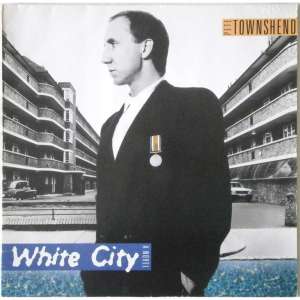
I encountered this album a couple of years after its release when I was newly-qualified as a teacher and sharing a house in west London with a couple of other guys in a similar situation. One of them had a copy of this album (and a crappy portable record player to play it on) and from the first listen I was hooked.
Surprise, it’s a concept album, albeit a loose one with a story about a famous ex-resident of the White City housing estate revisiting the place where he grew up. The themes explored in the album resonated with me, as did the 60-minute film that was made as a companion to the album. Coincidentally, a few years later I had reason to regularly drive through White City, and I would always think of the songs on this album.
Here’s a link to “White City Fighting” from the album.
13/20 – Today’s album, “Standards Vol. 1” by Stanley Jordan (1986) had a big impact on me as it redefined what guitar music could sound like.
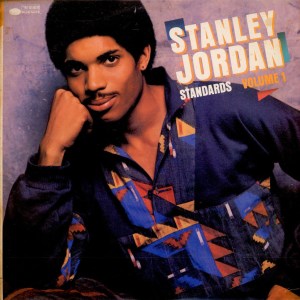
Jordan is a master jazz guitarist who rarely plucks a string. Instead, he plays with both sets of fingertips on the fretboard, tapping the strings against the frets to produce notes. This gives him the ability to play chords and melody simultaneously, giving an almost piano-like effect.
The first time I heard this album I thought it was two people playing, or at least the use of overdubbing. It isn’t – I have since seen him perform live! This album showcases Jordan’s amazing talent, featuring inventive arrangements of well-known tunes like “The Sound of Silence”, “Georgia On My Mind” and “Moon River”.
Here’s a link to the amazing version of “My Favorite Things” on “Standards Vol. 1”
14/20 – What – ANOTHER concept album? Actually, it’s a bit more than that. Today’s choice of album-that-made-an-impact is more of a full-scale audio drama with music. “Jeff Wayne’s Musical Version of The War of the Worlds” (1978) is probably an album that had an impact on a lot of British people of a certain age.
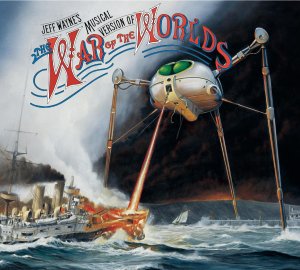
This double-album was a smash hit at the time, spawning two Top Ten singles, and would go on to sell fifteen million copies worldwide. It featured Richard Burton as the narrator of the story and a veritable Who’s Who of British music from the 1970s as the cast and musicians.
I have heard the Orson Welles radio play, seen the 1953 and 2005 film adaptations and recently watched the BBC’s impressive three-part TV adaptation, but to me Jeff Wayne’s musical version remains the definitive re-telling of H G Wells’ classic novel.
Here’s a link to the single version of “The Eve of the War” by Jeff Wayne and his Orchestra.
15/20 – We’re staying in the late 1970s for today’s album that made a great impact. It’s “Replicas” by Tubeway Army, the band name used by Gary Numan before he started releasing music under his own name.
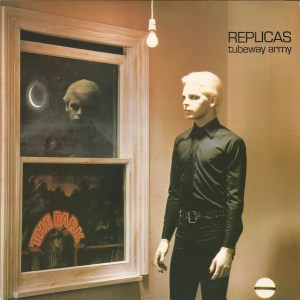
This is the album that gave us the UK number 1 single “Are ‘Friends’ Electric?” and virtually invented electronic pop music as we know it. Artists as diverse as Trent Reznor and Kanye West claim Numan as an influence.
The unique sound of the instrumentation on this album made a big impact on me, with the weird keyboard tones (a Minimoog synthesizer played through various guitar effects pedals) combining with the usual guitar, bass and drums. There is even an appearance by an early drum machine. The subject matter of the songs was stark and striking too, “Replicas” being (surprise!) a loose concept album with tales of a dystopian future in a surveillance state with cyborg law enforcement.
Trivia time: The music video for “Metal”, a single from “The Pleasure Principle”, Numan’s follow-up to “Replicas”, was filmed at the British Short Circuit Testing Station on Victoria Road West in Hebburn, close to the house I grew up in.
Anyway, here is a link to “Are ‘Friends’ Electric?” by Tubeway Army.
 Andrew Gilhooley's Blog
Leave a comment