Here’s the final part of a series of 20 albums I picked for a Facebook challenge a few years ago. The challenge was to choose 20 albums that had made an impact on me. For each album I mention, I’m including a YouTube link to a track from that album so you can get a taste of the music. I have also included my Day 21 post-challenge post.
16/20 – We’re heading to the shipyards of the North East of England for today’s album-with-an-impact choice, “The Soul Cages” by Sting (1991).
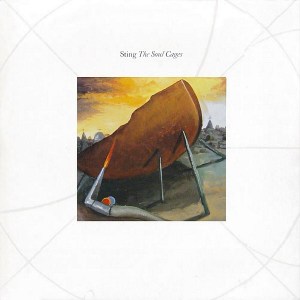
Generally seen as a bit of a “love it or hate it” album, “The Soul Cages” is Sting’s meditation on his father’s death. It is therefore a fairly melancholy collection of songs, with lyrics about human mortality, personal loss and life’s questions, inspired by Sting’s childhood in Wallsend.
Suffice to say, I love it. To fully explain this album’s impact on me would entail getting way more personal than I would feel comfortable doing in a public forum like this, but it is an album that I have returned to time and time again in the years since its release. With both of my own parents now deceased, the strength and meaning of the album’s messages only seem to increase as time goes by.
Sting revisited these themes himself over 20 years later in “The Last Ship” (2013), which eventually became a stage musical and is currently touring Europe after its US run was cancelled due to the COVID pandemic.
Here’s “Why Should I Cry For You?” from “The Soul Cages”.
17/20 – Back to the 1970s again for today’s album that made a great impact – 1975’s “A Night at The Opera” by Queen.
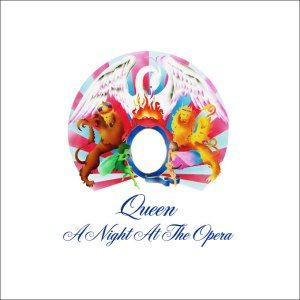
This album, and its signature song “Bohemian Rhapsody”, have been part of the rock canon for so long now that it is hard to imagine a world where they weren’t well-known classics. I do remember as a youngster hearing “Bohemian Rhapsody” on the radio – as a newly released song – and being entranced by this song that sounded like nothing I had ever heard previously! And the video! With all the weird effects and scrolling heads!
In all, “Bohemian Rhapsody” would spend nine weeks at the top of the charts, including the Christmas and New Year period. I would later discover the rest of the album and find that every song on it was an absolute belter. What really struck me about this album was the range of different musical styles displayed, yet they all sounded like the same band. That consistency-yet-variation is something that since then I have always admired and pursued in my own composition and production.
As an aside, I find it amusing that, apparently, a common mishearing of Bohemian Rhapsody’s title is “Bohemian Rap City”!
Here is the epic “Prophet’s Song” from “A Night At The Opera”
18/20 – We couldn’t let a list of albums that made a big impact on me go by without a Led Zeppelin one. Today I’m choosing Led Zeppelin’s untitled fourth album, released in 1971.

I had two older cousins, both now sadly deceased, who introduced me to a lot of rock music when I was growing up. One of the albums I distinctly remember hearing for the first time was this one. Led Zeppelin IV, as it is commonly known in lieu of a real title, is in many ways the quintessential rock album. It has everything, really: the intriguing cover art, the clever marketing gimmick of the missing title, the four mysterious symbols, the thumping rock songs, the blues, the folky numbers and, of course, “Stairway to Heaven”.
Something that future generations may lose if some of the current trends in music continue is the experience of listening to an album and it taking you on a journey. In my opinion the best way to experience this album is to listen to it as a complete entity, to take that journey from the opening call and response of “Black Dog” all the way to the closing thump and crash of “When the Levee Breaks”. It’s a trip well worth taking.
Here is “When The Levee Breaks” from Led Zeppelin’s fourth album.
19/20 – Albums can make an impact on you for all sorts of reasons. Today’s album is significant to me because it shows that fate can be fickle, that sometimes a band or album can have all the right pieces but they don’t quite fit together in a way that equals commercial success. Here’s an obscure slice of 1980s rock in the shape of “Waiting for the Floods” by The Armoury Show (1985).
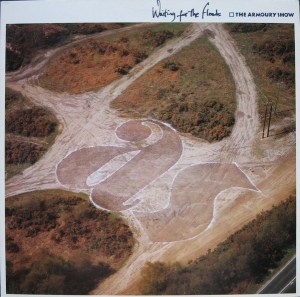
In the late 1970s and early 1980s, Scottish band The Skids enjoyed a run of chart successes including their singles “Into the Valley” and “Masquerade”. When The Skids disbanded in 1982, guitarist Stuart Adamson went on to great success and acclaim with his new band Big Country. Skids singer Richard Jobson and bassist Russell Webb joined with guitarist John McGeoch and drummer John Doyle from also-disbanded Magazine to form The Armoury Show, a band destined for obscurity.
The Armoury Show released a handful of singles along with this solitary album, but they never achieved the success of their contemporaries such as Big Country, U2 and Simple Minds, despite playing a similar brand of anthemic rock whilst maintaining a distinctive sound of their own.
Listening to this album 35 years on (ouch!) it’s hard to discern why The Armoury Show never caught on in the way they probably should have. It’s a fine piece of work with memorable songs and creative arrangements that stands up well against anything by the big rock bands of the time. Sure, some of the in-vogue-in-the-1980s production techniques are showing their age now but that could be said of a lot of music from that era. In the end it is testament, I suppose, to how much blind luck is involved in these things. For what it’s worth, I count “Waiting for the Floods” among my favourite albums of the era, yet had I not been introduced to it by my girlfriend at the time, I might never have heard it either.
Here is “Castles In Spain” from the Armory Show’s only album, “Waiting for the Floods”.
20/20 – And so we come to the end of this list of twenty albums that made a big impact on me. I am going to choose the sole compilation album in the list to finish it off: “Biograph” (1985) by Bob Dylan.
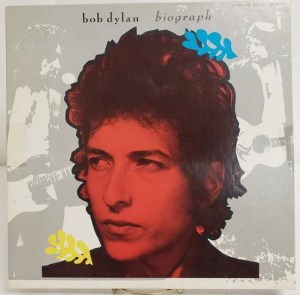
I’m choosing this one rather than any particular album from his gigantic body of work because this box set, loaned to me by another friend now sadly no longer with us, was what really got me serious about his music.
“Biograph” gives a good overview of Bob Dylan’s music from the first 20 years of his career and includes both released and unreleased tracks. There are a few omissions from his best-known tracks, but the unreleased material more than makes up for it and provides other insights into his writing.
One track that particularly stands out for me in this collection is an unreleased live version of “Visions of Johanna” from 1966. Recorded at the Royal Albert Hall, it is just Dylan, his acoustic guitar and harmonica, and it sounds like a haunting plea from a lost soul. Hearing this recording played a major part in me starting to perform as a soloist, so impressed was I by the emotion and intensity he was able to conjure up.
Many years later, I heard a live recording of Robyn Hitchcock performing a set of Dylan songs. One of them was “Visions of Johanna” and when he introduced the song, he recounted almost word for word having the same experience when he first heard it. So, I guess I am in good company.
Here’s that live version of “Visions of Johanna” from the Royal Albert Hall, London in 1966.
21/20 – Wait, what?!?
** BONUS DAY **
First of all, if you have read some or all of my album-related postings over the past couple of weeks, my thanks go out to you. I hope you have enjoyed reading them as much as I have writing them.
Yesterday in presenting my choice for the day, I mentioned Robyn Hitchcock and realized that he was an influential musician in my life, and I hadn’t included any of his albums. I then thought of Al Stewart, Ray Davies, Joni Mitchell, David Byrne, Andy Partridge, Kate Bush and many other artists whose work have had a great impact on me.
The fact is, it was easy to think of twenty albums that had an impact on me. Far harder was keeping it to just twenty. I could quite easily have carried on indefinitely, especially if I could have repeat entries by an artist (in this list I was particular not to repeat). I have a sneaking suspicion that many people could do the same.
Over the course of my life to date I have met people who were into many different types of music. Just looking at some other people’s posts on this topic I have received a real education, discovering some really cool bands and albums that I had never previously known existed. However, I’d be hard pressed to think of anyone that I have met who doesn’t care for any kind of music at all.
Music does seem to be our universal language, something that gives us infinite scope for expression and connection. We only have twelve notes in our Western musical scale, yet the ways we put them together seem infinite. When we hear music from other traditions that have other rules, for want of a better word, they often sound strange yet familiar. Music seems to be something that is innate in us as humans, and therefore something that has the potential to unite us all. That’s something to hold on to in our troubled times.
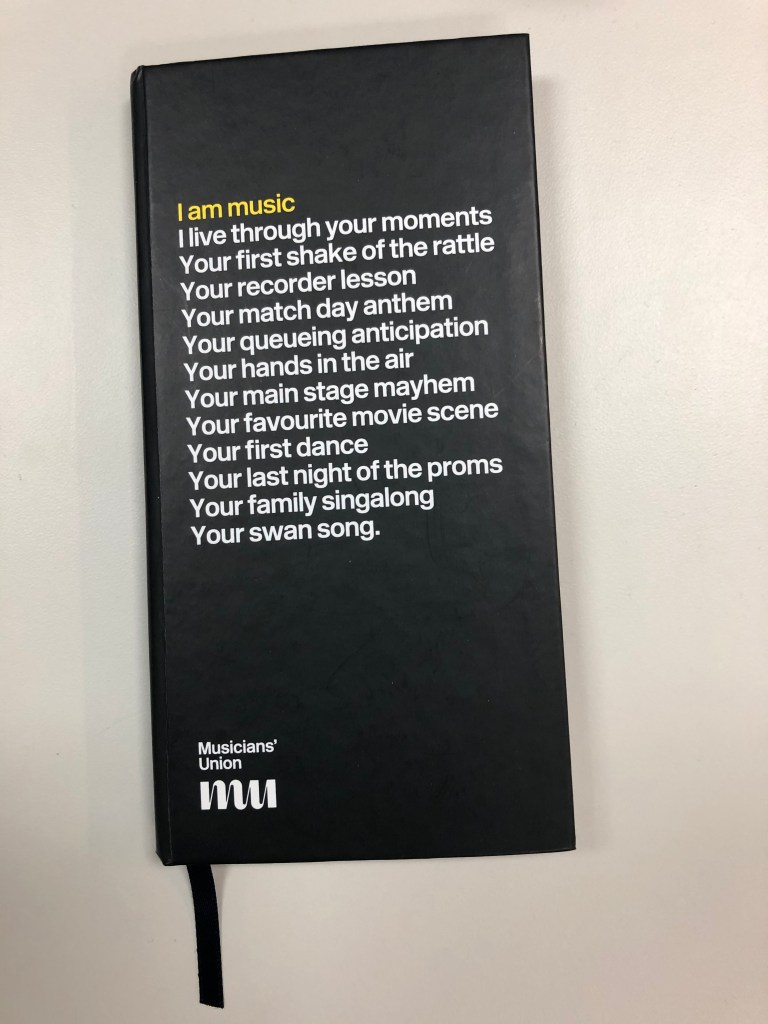
I’ll leave you with this photograph of the cover of my Musicians’ Union (UK) diary for this year. The words there express it better than I ever could.
 Andrew Gilhooley's Blog
Leave a comment