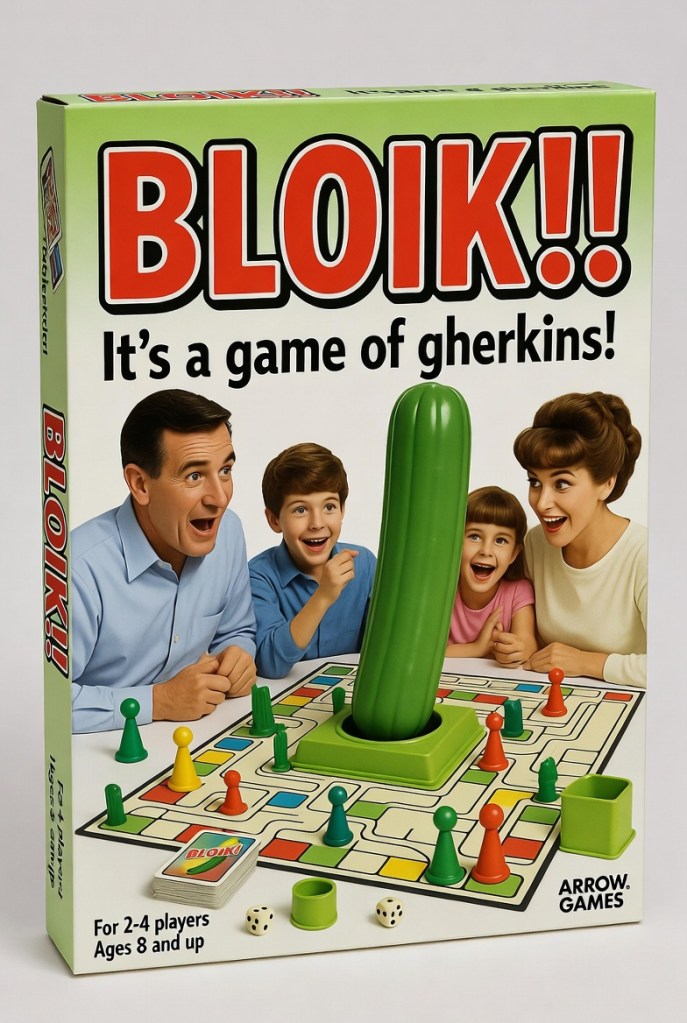
After writing last week’s post about nostalgia, I started thinking about the fact that the things people get nostalgic for are often cultural: Television shows (the 1960s adaptation of Robinson Crusoe and The White Horses often come up in discussions by British people around my age), board games (Mouse Trap, Operation and Bloik!!), sweets and other snacks (Mint Cracknel, Matchmakers, Cabana bars), and so on. In other words, all the little parts of our lives that are transient, that go in and out of fashion. In other words, all the things that change over time.
It didn’t really occur to me when writing last week’s post, although perhaps it should have done, that people who grew up with the internet would have their own kind of nostalgia for that. After all, the World Wide Web has been around for over thirty years now. A quick look at Reddit turned up questions like “Those who grew up with the internet in the 90s/00s, what was it like?” in addition to the expected “What was life like before the internet?”
I could write a whole discussion about those sorts of topics, and maybe I will one day. After all, what is changing faster than the online world? The technologies around the internet and our access to it have developed at an astonishing rate since its inception. When I first got online around thirty years ago using a 486 PC and a 28k modem, the idea of a modern smartphone was still within the realms of science fiction. So sure, there is a lot of nostalgia about for the old Web 1.0, with its static HTML web pages and personal sites, GeoCities and all the rest. The early Web 2.0 sites like Livejournal and Myspace similarly seem quaint in today’s TikTok and Instagram world.
The crux of my realisation, however, was that at some point, people will be looking back on today’s world with nostalgia. Of course they will; it’s human nature to do that, no matter how weird it might seem right now. As the saying goes, never forget that no matter how crappy a day you might be having, these are the good old days that you will look back on in 25 years.
One thing I do wonder about, however, is how the growth of AI technologies is going to influence our memories of the past. Already, we have AI image and video generation that is capable of amazing things.
As you may know if you have read other posts on this blog, I am interested in Tyneside history. There is a YouTube page called River Tyne Time Machine which features videos generated by AI from old photographs. Here is one featuring Eldon Square shopping centre:
As you can see, the results are incredible. There are a few “tells” that point to its AI origins, but imagine how good these AI-generated videos will be in five to ten years. I imagine they will be indistinguishable from the real thing.
There is something that concerns me in all of this. It’s something to do with the difference between memories stirred by a genuine photograph or film versus those stirred by on that has been created. There’s something Orwellian about the whole possibility of using AI technologies to rewrite the past, and the purposes to which this could be put.
Let’s go back to the beginning of this post. Do you remember playing Bloik!! as a child? Nor do I – the game doesn’t exist. It was a board game in a dream I had when I was a child. The vivid imagery of the giant gherkin emerging out of the board stuck with me all these years, and now I have been able to use an AI image generator to create a photograph of the game’s box top. I could probably create a video of a family playing the game too if I had a mind to. It is entirely possible that these images and videos could trigger in someone a vague, and false, memory of the game.
So what is the difference between a memory stimulated by a real picture or film versus an AI-generated one? Perhaps, as someone suggested to me, it isn’t important so long as we are aware of what we are looking at. An AI-generated video such as the Tyneside ones I mentioned above could be very useful in providing someone who wasn’t old enough to remember cars on Northumberland Street in Newcastle with an impression of what that might have been like – the important words being “impression” and “might”. What they would be watching was a simulation of the past, not the real thing. The awareness of that is very important.
We are incredibly close to having the technology to create completely realistic photographs, videos and audio recordings available to the average person. The fact is, that will be open to a lot of nefarious use by bad actors. I don’t feel that I am being unduly alarmist in saying these things.
We should have started having serious discussions about the ethical uses of AI quite some time ago. The idea of students using ChatGPT to cheat on homework essays seems so innocuous now, and that was not even four years ago. Make no mistake, AI is here to stay. Exactly what that means is up to us.
 Andrew Gilhooley's Blog
Leave a comment