One of the things I am extremely grateful to my mother for is instilling in me a love of reading. From a very early age she would read to me as I sat on her lap, watching her finger pointing out the words on the page. I was able to read well before I started infant school, and have been a voracious reader ever since.
I remember some of my earliest books being Ladybird books, such as Tootles the Taxi, Jack and the Beanstalk and The Enormous Turnip. As I graduated to longer stories, probably around age 6, I began to encounter the books of Enid Blyton. I remember reading a copy of Noddy that had belonged to my mother when she was young, but the first Enid Blyton book I remember making an impression on me was The Adventures of Pip.
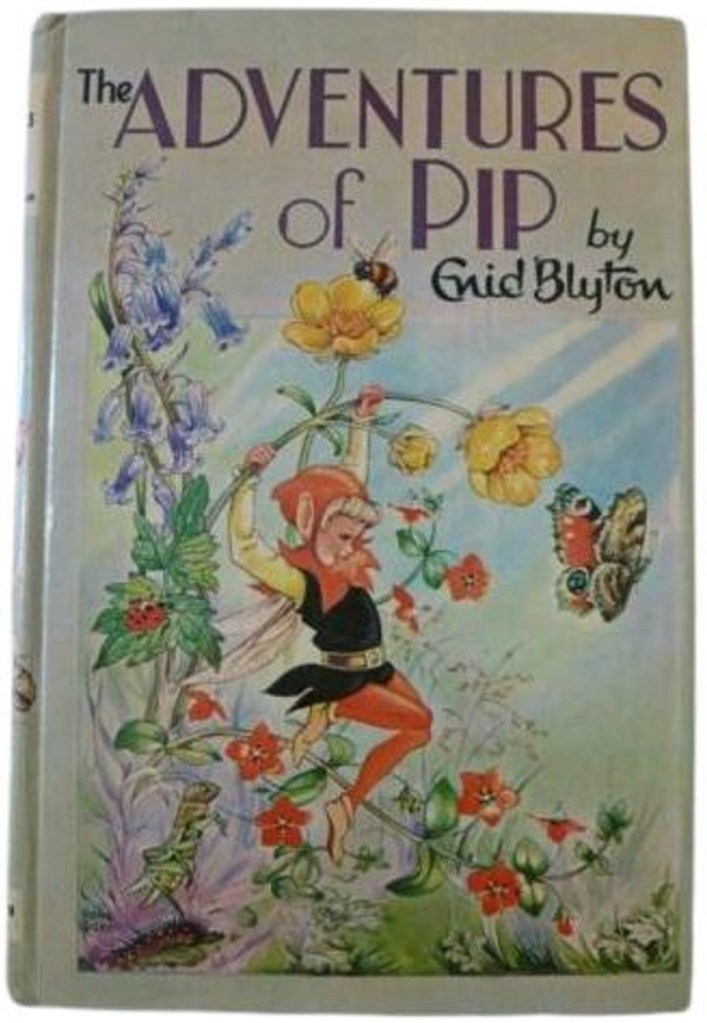
The Adventures of Pip is a collection of short stories about an inquisitive pixie named Pip, who lives in the countryside with his Aunt Twinkle. Pip, occasionally accompanied by his friend Jinky, has adventures meeting various animals, birds and plants, and in the process the reader learns some interesting facts about nature. Examples include the fact that you can tell male and female sparrows apart because the males have black bibs (in the story, Pip paints them on) and that mistletoe plants grow on the bark of other trees. I remember loving Pip’s gentle adventures as a young child, and re-reading the book again and again.
The next book that I remember reading was The Folk of the Faraway Tree, which I received for Christmas one year. This book is part of a series telling the story of three siblings, Jo, Bessie and Fanny, who live with their parents in the countryside. Near to their cottage is the Enchanted Wood, which is inhabited by fairy folk and is home to the Faraway Tree. This is the tallest tree in the wood, so tall that it grows up to the clouds. At the top of the tree is a ladder that leads through the clouds to a different magical land every week. Some of the lands are nice, like the Land of Tea-Parties and the Land of Treats; other lands might be dangerous, such as the Land of Giants and the Land of Dreams. The children, along with the inhabitants of the tree (Moon Face, Silky the fairy and the Saucepan Man among others) visit these lands and have exciting adventures. The stories are aimed at young children, so while they are exciting, they are not scary.
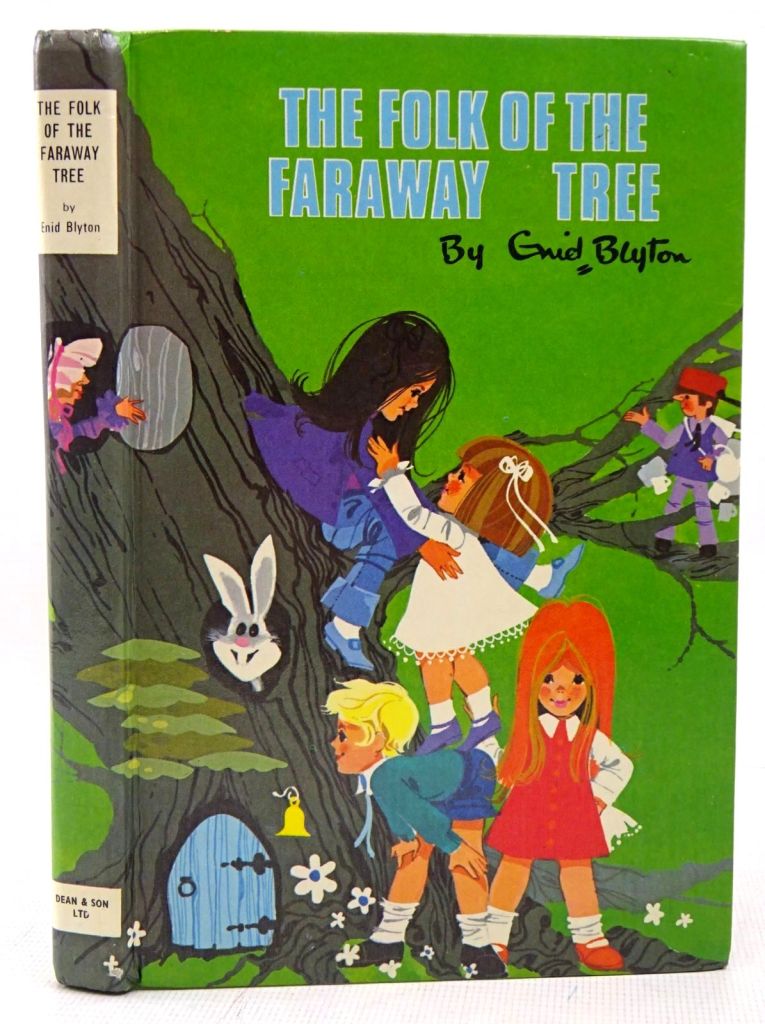
In The Folk of the Faraway Tree, the children are visited by their cousin Connie from town. Connie is a selfish, nosey, stuck-up girl who does not believe in anything magical, including the Faraway Tree and its inhabitants. After several adventures up the tree, she changes her attitude and learns to become a kinder person, helping the children to save the tree from trolls digging among the roots for treasure.
I was captivated by the stories of the Faraway Tree and I read and re-read this book. I was delighted to find out that this was the third in a series of books, so pestered my mother for the first two, The Enchanted Wood and The Magic Faraway Tree. All three follow the same formula, where each chapter is a self-contained adventure, possibly with a longer, multi-chapter adventure at the end.
I also remember very much enjoying another, similar pair of books about Peter and Mollie, a brother and sister who find a magical wishing-chair in a mysterious antique shop. The chair periodically sprouts wings on its legs and flies the children off to magical lands similar to those in the Faraway Tree series.
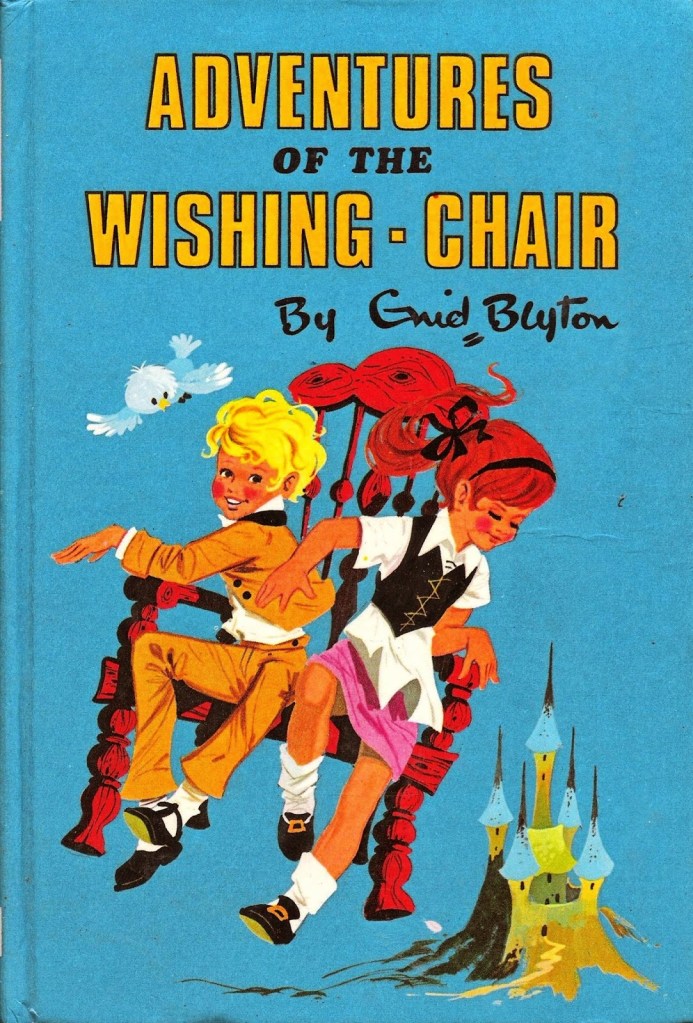
Early on in the first book, the children rescue a pixie from an evil giant, and he comes to live in their playroom. The three go on to enjoy a series of adventures where they meet wizards, witches, goblins and other magical folk.
The Faraway Tree and Wishing Chair books were perfect for me as a young reader, with highly imaginative stories, engaging characters and gentle conflict that was often resolved by doing the right thing, thus teaching the reader moral lessons without being overtly preachy.
As I got a little older, Blyton’s Secret Seven books became required reading for myself and my friends. These books, while short at around 100 pages each, were full-length novels set firmly in the real world, with no magical content. They follow the adventures of seven children who have a secret club that meets after school in a garden shed. The club often finds its way into investigating mysteries in the local area, including burglaries and car and horse thefts.
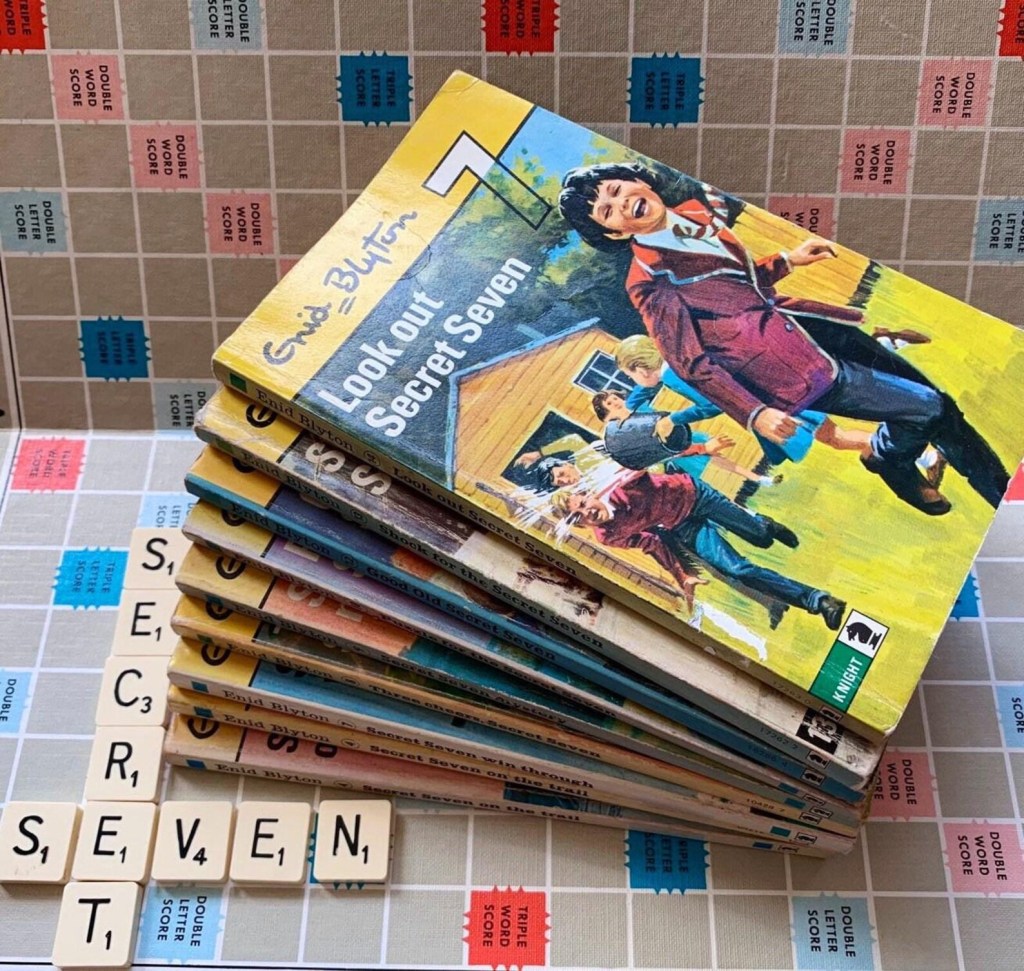
The Secret Seven adventures ran to fifteen books published between 1949 and 1963. They were exciting adventures, and my friends and I would eagerly seek them out in the library at St. James’ Junior School. I think we all dreamed about being a member of a secret club with a shed and badges and passwords, and of getting into adventures like the children in the stories.
Blyton wrote other, similar series of books about child detectives, including the Five Find-Outers series and, for slightly older readers, the Famous Five novels that were eventually made into a TV series (which itself was famously parodied by The Comic Strip). However for me, the Secret Seven stories are the ones of which I have the fondest memories.
This seems an opportune moment to take a short pause to discuss some of the contemporary and modern criticisms of Enid Blyton’s work. She wrote the majority of her books from the mid-1930s to the 1950s, and even at the time there were criticisms of her stories for being simplistic and repetitive, recycling plots and settings.
Additionally, the books reflect some of the prevailing attitudes of the time they were written, leading to accusations of racism, sexism, classism and xenophobia. Modern reprints of some of the books have attempted to correct some of these elements for modern audiences, which has itself led to controversy over “tampering” with existing and well-loved works.
From my own perspective, at the age I was when I read Blyton’s books most of the things that people criticise about her work would have gone over my head. The simplicity and repetition made the books easily digestible for a young reader. I was aware that the characters in the books seemed to come from wealthier families than mine because they had maids, cooks and gardeners and sometimes went to boarding school, but to me that was all part of the fantasy. Comments like “Oh, just like a girl to [whatever]” were just boys and girls being nasty to each other, as they do. At that age I had no idea that Dick and Fanny were anything but the characters’ names, and the golliwogs were just stuffed toys.
All criticisms aside, there can be no denying that Enid Blyton’s stories have been popular with generations of children and are an indelible part of British culture. With over 700 books published, along with hundreds of short stories, poems and other writings, this article can barely scratch the surface of her work. I am merely detailing some of the books I recall reading and enjoying. I am sure that other people have their own favourites.
At the time of writing, the UK release of a new live-action film based on the Faraway Tree series is imminent. It looks very much as though her stories and characters will be delighting children for many years to come.
Did you grow up reading Enid Blyton? If so, what were your favourite books? Please get in touch via the Comments form below – I’d love to hear your memories!
 Andrew Gilhooley's Blog
Leave a comment